K Subsea Group Ransomware Claim by Everest (Apr 2026)
Unverified dark web claim. This report is based on a post observed on a dark web forum. Yazoul Security has not independently verified the authenticity of this claim.
Leak Site Screenshot
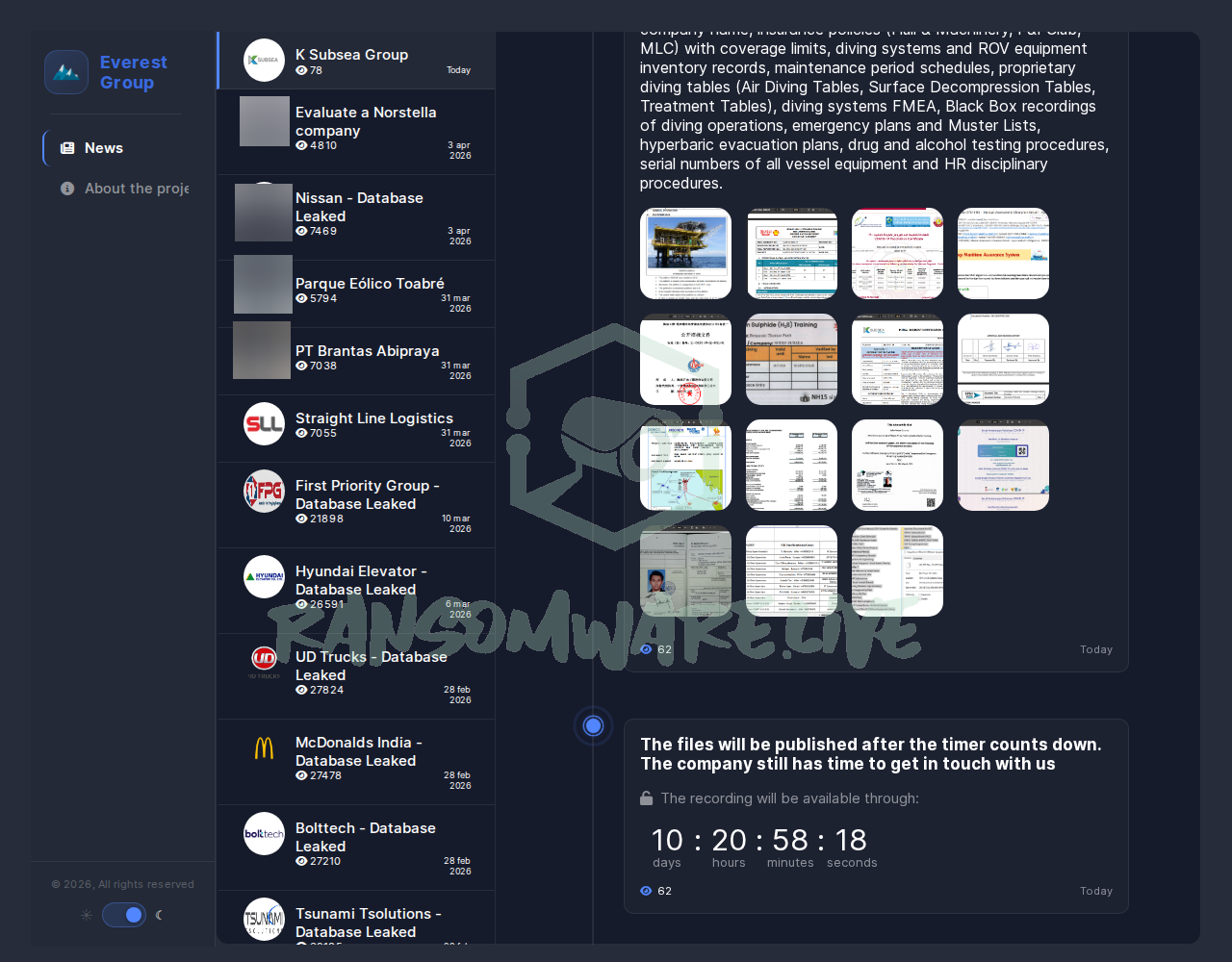
Screenshot captured at time of discovery. Sensitive data has been redacted.
Claim Summary
The Everest ransomware group has posted an unverified claim of a cyberattack against K Subsea Group, a Norway-based company specializing in subsea pipeline and cable services for the offshore energy sector. According to the group’s leak site, the alleged intrusion occurred on April 13, 2026. Everest claims to have stolen data from the organization but has not disclosed the volume or provided samples to substantiate the claim at this time. The post serves as an initial pressure tactic, typical of ransomware operations, to coerce the victim into negotiations.
Threat Actor Profile
Everest is an established ransomware-as-a-service (RaaS) operation with a significant track record, having allegedly victimized over 330 organizations historically. The group is known for a double-extortion model, stealing data before encryption and threatening to publish it. Their known toolset, as referenced in industry advisories, includes a combination of legitimate admin tools and offensive security frameworks for initial access, lateral movement, and persistence. These reportedly include ProcDump for credential dumping, SoftPerfect NetScan for network discovery, and remote access tools like AnyDesk, Atera, and Splashtop. Their use of Cobalt Strike, Metasploit, and Meterpreter indicates a capability for sophisticated post-exploitation activity. Detection guidance, including YARA rules, has been published by cybersecurity agencies to help identify related malware and tradecraft.
Alleged Data Exposure
The threat actor claims to have exfiltrated data from K Subsea Group but has not detailed the specific contents. Based on the victim’s profile in the offshore energy sector-involving engineering, marine contracting, and client projects-sensitive information could potentially include proprietary technical designs, project specifications, vessel data, client contracts, and employee information. However, without proof from the leak site, the exact nature and validity of the alleged data breach remain speculative.
Potential Impact
If the claim is valid, a breach at K Subsea Group could pose significant risks. The exposure of sensitive operational data could undermine competitive advantage in a specialized market, potentially affecting bids for offshore projects. Furthermore, the leak of client or project data could lead to contractual breaches, regulatory scrutiny-especially across multiple jurisdictions like Norway and the UK-and reputational damage. For the energy sector, such incidents can also raise indirect concerns about operational safety and supply chain security.
What to Watch For
Monitor the Everest leak site for potential updates, such as the publication of a data sample or a file tree, which would escalate the pressure on the victim. Organizations in the energy and maritime sectors should review their defenses against the known Everest toolset, ensuring robust segmentation, monitoring for the use of tools like Cobalt Strike and AnyDesk in unauthorized contexts, and reinforcing credential hygiene. Given the group’s history, a ransom deadline may be set if negotiations are not initiated.
Disclaimer
This report is based on an unverified claim from a ransomware group’s data leak site. Yazoul Security has not independently confirmed the breach of K Subsea Group. The details presented, including the attack date, data claims, and threat actor profile, are sourced solely from the adversary’s post and open-source intelligence. Ransomware groups frequently exaggerate claims to pressure victims into paying. This information is provided for situational awareness and defensive purposes only.
CTI Research? Separate Your Traffic
Investigating dark web forums, threat actor infrastructure, or malware C2 panels? A VPN isolates your research traffic from your corporate IP. Layer it under Tor or route your sandbox egress through it for clean attribution separation.
Get NordVPN for CTIAffiliate link — we may earn a commission at no extra cost to you.
Never miss a threat intelligence alert
Get real-time security alerts delivered to your preferred platform.
Related Claims
Mag. Fünder Hausverwaltungs GmbH — incransom
Clearwater Marine Aquarium — qilin
Gruppo ICM SPA — qilin
Limkon — qilin